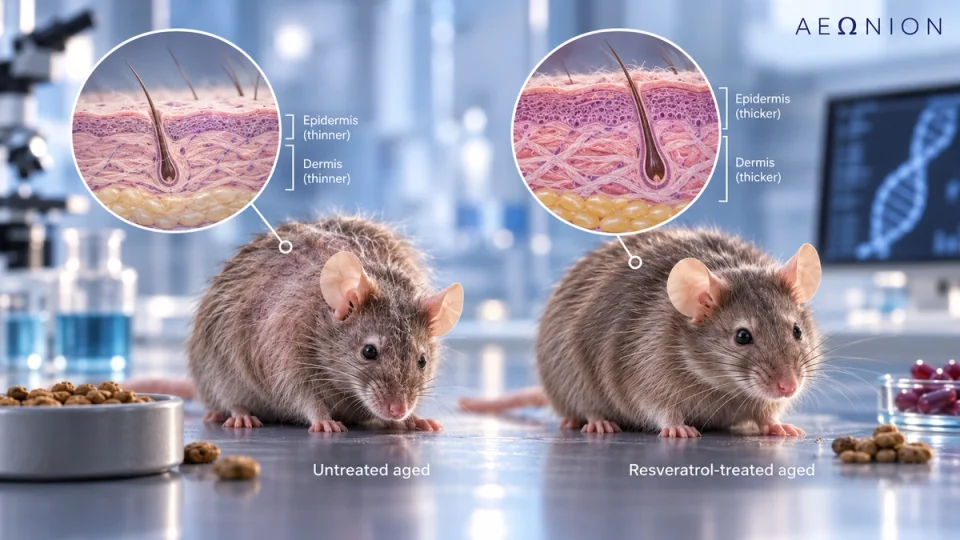
Mice given resveratrol in their food developed thicker skin than untreated animals of the same age, according to a study from Sapporo Medical University in Japan. The result points to a possible way of limiting age-related skin thinning, although the experiment did not test whether the compound improves wrinkles or skin health in people.
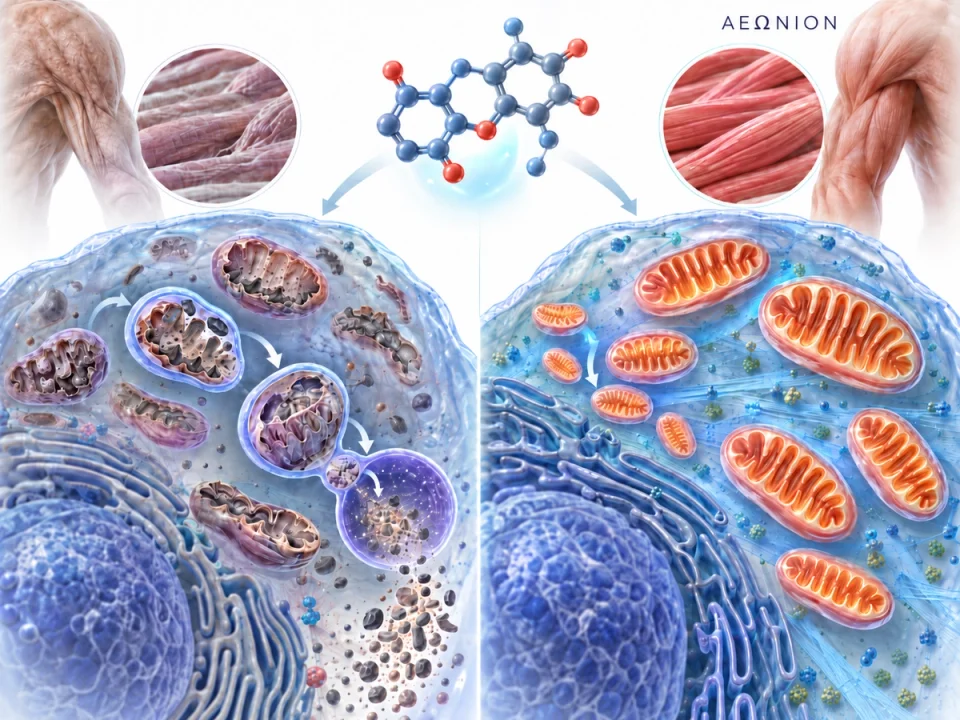
Researchers study resveratrol, a plant compound, in aging partly because laboratory experiments show it can stimulate an enzyme called SIRT1. This enzyme helps regulate cellular stress responses and the recycling of damaged cell components, functions that could matter for maintaining tissues as they age. That provides a reason to test resveratrol in aging skin, but it does not establish that taking it slows aging in people.
The research, published in The Journal of Dermatology on August 24, followed male mice given resveratrol from 28 to 60 weeks of age. Their food contained 0.4 grams of the compound per kilogram of feed. Researchers compared them with untreated 60-week-old mice and a separate group of younger, 20-week-old animals.
The main skin-thickness measurements involved six mice per group. After 32 weeks of treatment, the outer layer of skin on the animals' backs—the epidermis—was thicker than in untreated older mice and similar in thickness to the younger group's. The deeper dermis was also thicker than in untreated older mice, although it remained thinner than in young animals.
The design does not establish whether resveratrol can reverse skin thinning once it has developed.
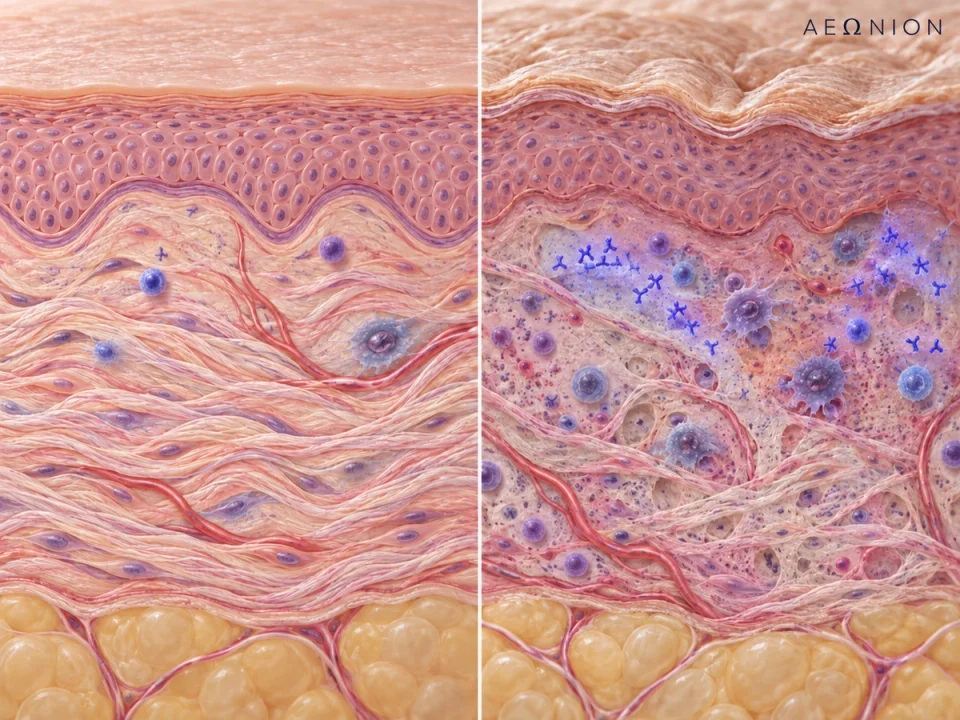
These layers depend on different kinds of maintenance. The epidermis needs a continuing supply of new cells, while the dermis relies on a supporting network that includes collagen. In treated mice, a higher proportion of epidermal cells carried a marker associated with cell division, suggesting that the tissue was better able to renew itself.
The researchers also explored SIRT1's role in skin cells. In a separate experiment using a human skin-cell line, reducing SIRT1 increased several signs of cellular senescence, a state in which cells stop dividing and change their behavior. That experiment supports SIRT1's role in skin-cell biology; it did not test resveratrol as a treatment in people.
How resveratrol produced the mouse result remains unresolved. The team did not disable SIRT1 in the animals to test whether the benefit depended on it. Levels of two enzymes involved in breaking down the skin's supporting tissue also tended to be lower with treatment, but the differences from untreated older mice were not statistically significant.
The study therefore offers evidence about skin structure in a small group of male mice, rather than proof of rejuvenation. It did not establish improvements in wound healing, moisture retention or visible wrinkles, and it provides no tested human dose. Further work needs to determine whether the thicker tissue functions better and whether similar benefits are possible in people.
Limits of the evidence
Small study in male ddY mice, with six animals per group for the main skin-thickness measurements. Treatment began at 28 weeks and ended at 60 weeks; this does not demonstrate reversal of previously established thinning. No human treatment, functional skin benefit, wrinkle reduction or human dose was established. The SIRT1 mechanism was not tested by blocking SIRT1 in vivo; treatment differences in dermal MMP-9 and MMP-13 staining were not statistically significant.
Sources
- SIRT1 Activator Resveratrol Attenuates Age-Related Skin Thinning in Mice
Tamura, Nojima and colleagues. The Journal of Dermatology. First published August 24, 2026. Mouse experiments and a cultured human skin-cell line.
- Evidence for a Common Mechanism of SIRT1 Regulation by Allosteric Activators
Hubbard et al. Science, 2013. Laboratory research supporting the SIRT1 background; not a human anti-aging trial.
- Resveratrol, a SIRT1 activator, attenuates aging-associated alterations in skeletal muscle and heart in mice
Hosoda et al. Journal of Pharmacological Sciences, 2023. Earlier mouse research on SIRT1 and cellular recycling; abstract reviewed for background.
Disclosure
The study was funded by JSPS KAKENHI and the Nakatomi Foundation. The authors declared no conflicts of interest.

Discussion
Have a question about the research or a perspective to share?
Loading discussion…