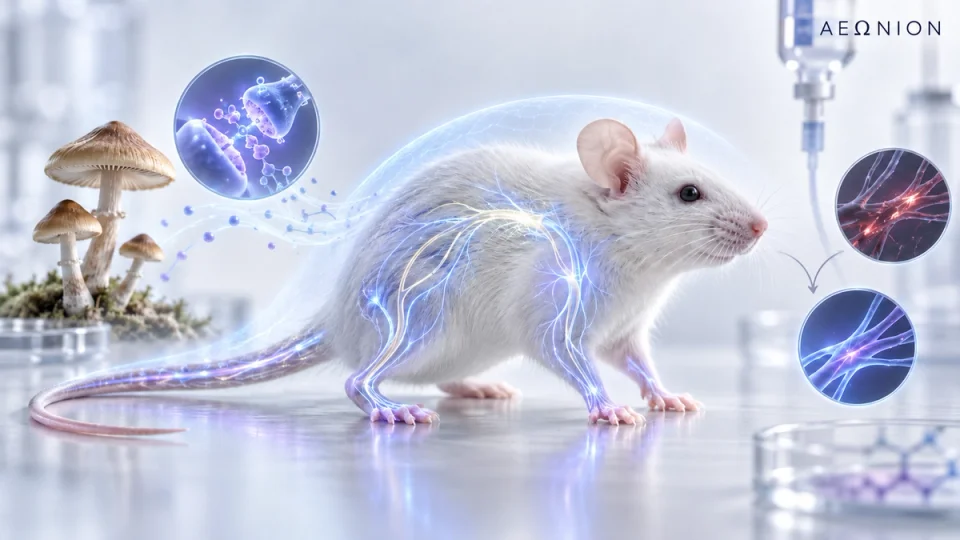
Psilocybin, the psychedelic compound found in some mushrooms, helped protect mice from nerve damage caused by chemotherapy. The findings point to an unexpected role for the drug: helping nerve cells keep their energy supplies in the right places. They do not yet show that it prevents this complication in people.
The study, published in Science on September 3, combined mouse experiments with tests on human nerve tissue and laboratory-grown sensory neurons. Researchers at MD Anderson Cancer Center investigated chemotherapy-induced peripheral neuropathy, damage to nerves outside the brain and spinal cord that can leave patients with pain, numbness or reduced sensation long after treatment ends.
In an initial experiment with four or five mice per group, two doses of psilocybin before cisplatin chemotherapy prevented the increased sensitivity to touch seen with cisplatin alone. Separate tests found protection against cold sensitivity, loss of touch sensation and the disappearance of tiny nerve endings in the skin. Benefits against touch hypersensitivity also appeared with the chemotherapy drugs paclitaxel and docetaxel.
Protection continued through six monthly cisplatin cycles in a longer experiment with five to eight mice per group. Crucially, the researchers repeated psilocybin pretreatment before each cycle. When chemotherapy restarted after tumour surgery without another pretreatment course, earlier doses no longer protected the mice.
The mechanism involves mitochondria, the structures that supply much of a cell's usable energy. Nerve cells must move them along their long extensions, called axons, to reach distant nerve endings. Cisplatin disrupted that movement. Psilocybin helped preserve transport and local energy availability, although it did not restore their impaired ability to use oxygen to generate energy.
Experiments implicated 5-HT2A, a protein on nerve cells that responds to serotonin, and a chain of signals supporting the cell's transport machinery. Blocking that receptor removed key protective effects. The team also observed protection of mitochondrial movement in nerve samples removed from 29 surgical patients and tested in the laboratory. Those were tissue experiments, not 29 people successfully treated for neuropathy.
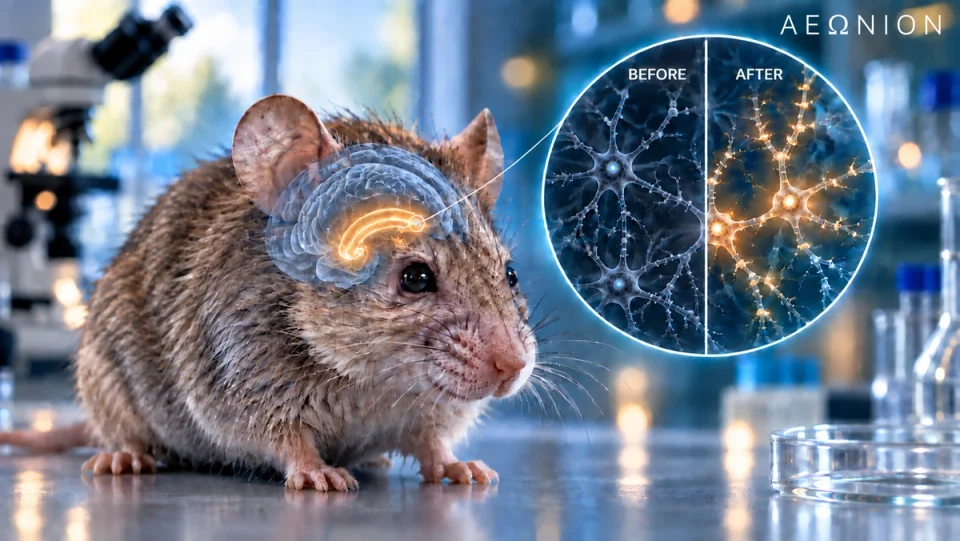
The findings extended beyond the nerves themselves: psilocybin also preserved aspects of brain activity disrupted by chemotherapy. Another experimental compound acting on the same receptor, described as nonhallucinogenic, produced similar protection against touch hypersensitivity in mice, suggesting that this benefit might be separable from psychedelic effects.
Small animal groups and laboratory tissue cannot establish clinical benefit or safety during cancer treatment. Psilocybin did not measurably change tumour growth in the tested mouse model, but that does not settle its effects across cancers and chemotherapy regimens. The study examined prevention, rather than reversal of established nerve damage.
A phase 2 study called NeuroGuard is registered to investigate psilocybin during chemotherapy. As of September 16, it was listed as not yet recruiting, with an estimated 83 participants and safety as its primary outcome. The next question is whether the nerve protection seen in these experiments translates into a meaningful, tolerable benefit for patients.
Limits of the evidence
Small mouse experiments and laboratory human tissue studies do not establish prevention or safety in patients. Pretreatment was repeated before each chemotherapy cycle. This study did not test reversal of established neuropathy.
Sources
- Psilocybin prevents chemotherapy-induced peripheral neuropathy through mitochondrial trafficking preservation
Heles et al. Science, 3 September 2026. Original research; mice and laboratory human tissue.
- Supplementary figures for Heles et al.
Figures S1–S13, including taxane experiments and tumour-growth comparison.
- NeuroGuard: Psilocybin Trial for Preventing Chemo-induced Neuropathy
Phase 2 registry record. Not yet recruiting; 83 estimated participants. Checked 16 September 2026; last update posted 31 August 2026.
Disclosure
The study received public and institutional research support. Usona Institute supplied psilocybin; senior author Moran Amit disclosed a provisional patent application involving 5-HT2A receptor agonists for toxicity mitigation.
Discussion
Have a question about the research or a perspective to share?
Loading discussion…