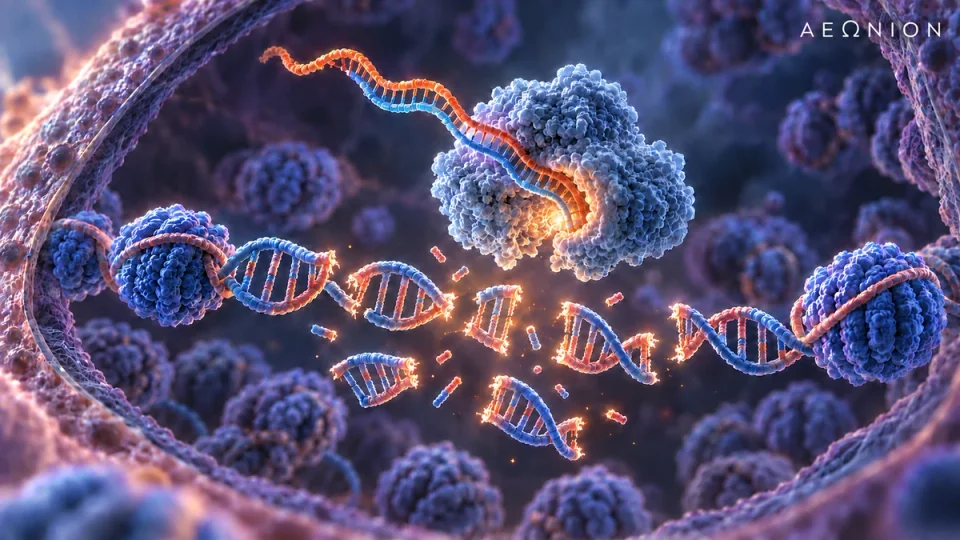
Researchers working with Jennifer Doudna, who shared the 2020 Nobel prize in chemistry with Emmanuelle Charpentier for developing the CRISPR-Cas9 gene editing tool. The scientists developed a novel CRISPR-based approach that distinguishes cancer cells from healthy cells and destroys their DNA. The study, led by first author Jingkun Zeng, was published in Nature on June 8, 2026. It is preclinical research, not a human cancer trial. Original study
The system uses an enzyme called Cas12a2. Researchers give it a short guide RNA that helps it recognize a particular RNA message inside a cell. RNA carries information copied from genes, so a cancer-linked mutation can leave a recognizable signature in that message. How the targeting works
Finding the matching message switches Cas12a2 on. It then cuts the cell's packaged DNA, known as chromatin, extensively enough to trigger cell death. Think of it as a detector connected to a shredder: the RNA supplies the identifying signal, and the DNA becomes the material destroyed. How Cas12a2 kills a cell
One target was TP53, the gene that makes p53, a protein that helps stop damaged cells from becoming cancerous. Some mutations disable that protection and are difficult to treat with conventional drugs. This approach uses the mutation to identify cells for destruction rather than trying to repair the broken protein. Why this target matters
In laboratory tests, the system distinguished selected mutant RNA sequences from their normal counterparts, even when they differed by just one genetic letter. Cells without the targeted mutation were largely spared in those experiments. That selectivity is encouraging, but it is not proof of safety throughout a human body. Cell experiments
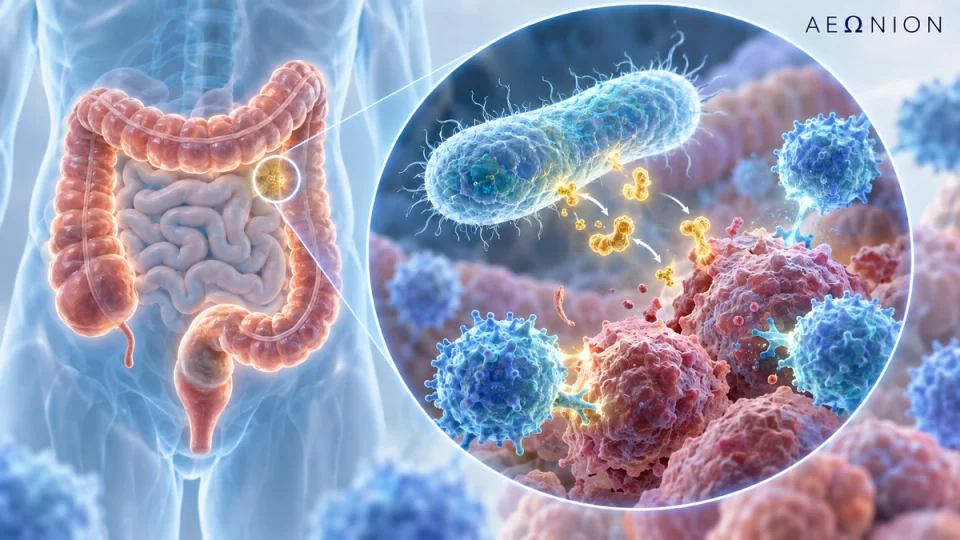
The researchers also packaged instructions for Cas12a2 and its guide into tiny fat-based particles and tested them in mice with liver or lung tumors. Treatment reduced measures of tumor burden compared with controls, taking the work beyond cells grown in a dish. Mouse experiments
A major challenge remains delivery: getting the system into enough cancer cells to make a useful treatment. Researchers must also establish how reliably it avoids healthy tissue. Changing the guide could allow other cancer signatures to be targeted, but each would need testing. Next steps
For now, the study offers an experimental route toward cancers that are difficult to target with drugs. It does not establish a cure or a treatment ready for patients. Study
Sources
- Targeting cancer-specific mutations with RNA-triggered chromatin shredding
Zeng et al. · Nature · June 8, 2026 · Preclinical research in cells and mice
- New CRISPR technique selectively shreds cancer cells, including “undruggable” cancers
Innovative Genomics Institute · June 8, 2026 · Research institution explanation
- Author Correction: Targeting cancer-specific mutations with RNA-triggered chromatin shredding
Nature · August 14, 2026 · Corrected a mutation label in Figure 4c
Disclosure
Several authors, including Doudna, are inventors on a related patent application and report biotechnology industry relationships.



Discussion
Have a question about the research or a perspective to share?
Loading discussion…