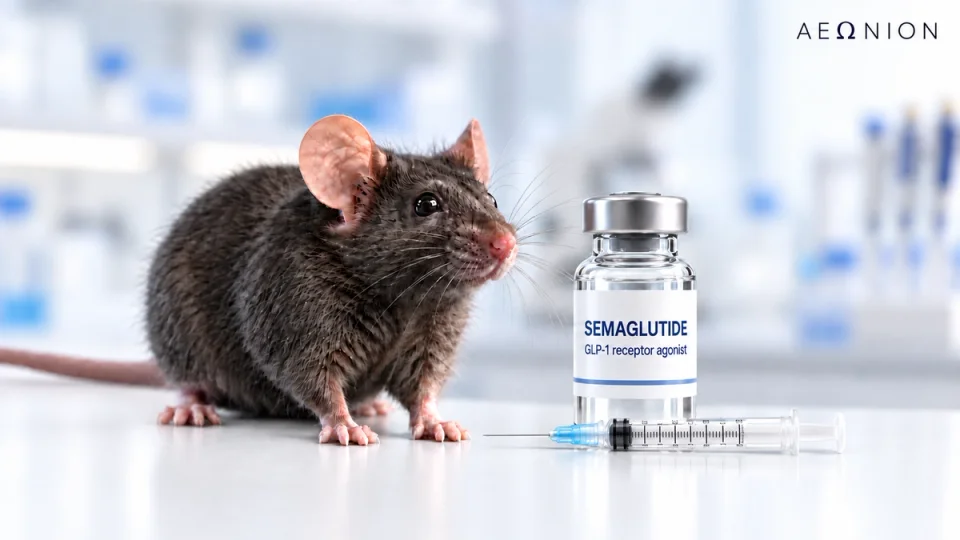
Semaglutide is best known as a treatment for diabetes and obesity. Now, researchers at the University of California, Berkeley, have investigated a different possibility: whether it could help animals stay healthier as they grow older. Their findings suggest its effects may reach beyond weight loss. Berkeley research report
In a study published in Nature on September 2, researchers began treating female mice when they were 20 months old. Forty received daily semaglutide injections, while 39 received saline. Treatment continued for the rest of their lives.
The treated group reached a median lifespan of 834 days, compared with 742 days in the control group—a difference of 92 days, or about 12.4%. Median lifespan is the age by which half the animals in a group have died. Read the study
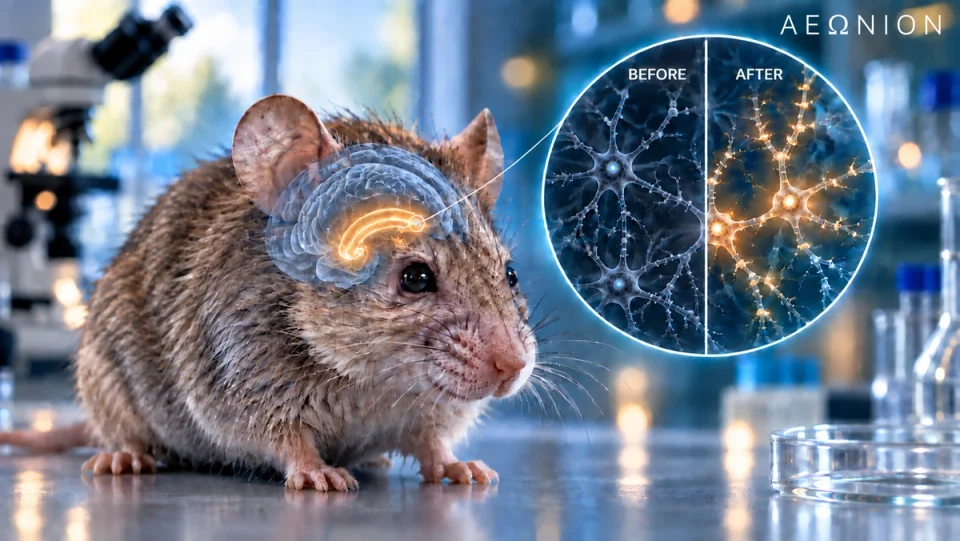
The researchers also looked at how well older mice functioned. In separate experiments, three months of treatment improved muscle and cognitive performance. They also found reductions in inflammation and changes linked to the body's declining ability to repair itself.
But semaglutide reduces appetite, which raises an obvious question: could eating less explain the benefits? In another experiment, the team compared treated mice with animals given 24% fewer calories. Both approaches helped, but semaglutide produced better results on some measures, including blood-sugar control and spatial memory—the ability to remember locations. Berkeley research report
That comparison did not establish whether semaglutide extended life more than calorie restriction. And the study involved female mice from one laboratory strain, so it cannot tell us whether the drug would lengthen human life.
The findings give researchers a reason to investigate further. Whether those benefits translate to people remains an open question.
Sources
- Late-life semaglutide treatment slows ageing and extends lifespan in female mice
Feng et al. · Nature · September 2, 2026 · Original study
- GLP-1 Treatment Extends the Lifespan of Older, Healthy Mice
University of California, Berkeley · September 2, 2026 · Institutional research report
Disclosure
The University of California has filed a patent application concerning GLP-1 drugs and healthy aging, disclosed in the study.



Discussion
Have a question about the research or a perspective to share?
Loading discussion…